
Live Chicken Transport Cage Trolley Buying Guide
For poultry farms, live poultry markets and transfer operators, a live chicken transport cage trolleyshould do more than simply hold poultry during movement. It should make daily handling easier, including loading, moving, checking, cleaning and preparing birds for short-distance transfer. For buyers who want to see the latest product update from Shandong Connection, you can also read our new multi-tier live chicken transport cage trolley announcement.
A suitable cage trolley needs to match the poultry size, site layout, floor condition, working height and loading process. This guide explains the main points buyers should review before ordering a poultry cage trolley, especially when the structure, tier quantity and overall dimensions need to be customized.
Why Cage Configuration Matters
Poultry handling is usually repetitive work. Chickens may need to be moved from farm areas to loading points, market preparation zones or temporary holding spaces. In these situations, the cage trolley needs to support regular movement, repeated loading and practical access.
A multi-tier trolley can help use vertical space more efficiently, but more tiers do not always mean better performance. The right configuration depends on poultry size, batch quantity, worker operating height, ground condition and transport space.
For this reason, buyers should review the cage as a working tool, not just as a product with fixed dimensions.
What Problems a Multi-Tier Cage Trolley Solves
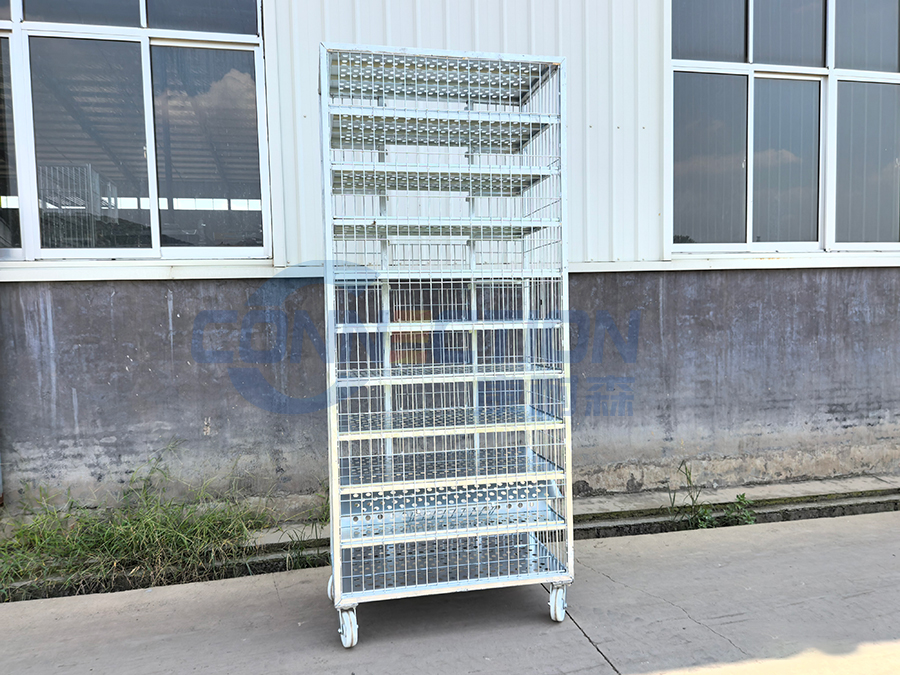
A multi-tier poultry cage trolley is useful when live chickens need to be handled in batches within limited floor space. Instead of placing cages across a larger area, poultry can be arranged on separate levels inside one movable cage unit.
This can help make the handling area more organized and easier to manage. Workers can move the trolley between different work points, adjust the internal space when needed and prepare poultry for loading or transfer in a more controlled way.
For buyers comparing different poultry handling solutions, the key is to check whether the trolley improves the actual workflow instead of only increasing storage levels.
Buyer Selection Points
|
Buying Point
|
What Buyers Should Check
|
| Tier quantity | Confirm poultry size, batch quantity, site height and worker operating height |
| Cage dimensions | Make sure the width, depth and height fit the working area and transport space |
| Gate access | Check whether workers can load, inspect and remove poultry conveniently |
| Internal shelf layout | Confirm whether foldable shelves support loading, unloading and cleaning |
| Wheel setup | Check floor condition, turning space, moving distance and operating method |
| Surface treatment | Choose a finish suitable for moisture, cleaning and repeated poultry handling |
| Custom requirements | Confirm tier quantity, overall size, wheel configuration and packing method |
This table should be used as a buying checklist before quotation. It is not enough to ask for a similar cage model; the supplier needs to understand how the cage will be used on site.
How to Decide the Tier Quantity
8-tier and 10-tier cage trolleys are common options, but they are not the only choices. Tier quantity can be customized according to poultry size, handling quantity, available room height and project requirements.
A lower cage can be easier for workers to access during loading, unloading and cleaning. A taller cage can provide more vertical placement levels when the site height and working method allow it.
Before confirming the tier quantity, buyers should consider three practical questions: how large the poultry is, how many birds need to be handled in one batch, and whether workers can safely and comfortably access each level during daily use.
How to Check Loading and Unloading Convenience
Gate access has a direct impact on handling efficiency. An openable front gate allows workers to place poultry into the cage, check each level and remove birds after transfer.
When reviewing a poultry transport cage, buyers should not only check whether the gate can open. They should also consider whether the opening size, direction and position are convenient for the actual loading method.
For daily poultry handling, a simple and accessible gate structure is usually more practical than a complicated design. The goal is to reduce unnecessary handling steps and make repeated operation easier for workers.
How to Review the Internal Shelf Layout
Each level of the cage trolley can be equipped with a foldable shelf. This design allows the internal space to be opened or adjusted when required.
Foldable shelves are useful for loading, unloading, inspection and cleaning. They also give the operator more flexibility when different poultry sizes or handling habits are involved.
For buyers, the important point is whether the shelf movement is easy to operate and whether the structure supports daily use. If the shelf design is difficult to open or clean, it may reduce efficiency in the long term.
How to Choose Wheels for the Working Site
Wheel configuration should be selected according to the site, not only according to the cage size. This cage trolley uses 4 units of 6-inch swivel nylon casters, which allow the trolley to be moved and repositioned on suitable ground conditions.
Before ordering, buyers should check the working floor, moving distance, turning space and whether the cage will be used indoors, outdoors or between different areas.
For uneven ground, wet floors or sloped areas, the wheel setup should be discussed carefully. A cage that moves well in one site may not perform the same way in another site.
Why Surface Treatment Matters in Poultry Handling
Poultry handling equipment may be exposed to moisture, feathers, dust, cleaning routines and repeated movement. Surface treatment should therefore be considered at the beginning of the order discussion.
This type of cage trolley is manufactured from Q235B steel and uses a hot-dip galvanized finish for regular poultry handling environments.
For buyers, the surface finish should match the cleaning method, storage environment and expected daily use. A suitable finish helps keep the cage easier to manage during long-term operation.
Reference Configurations for Quotation Discussion
The following configurations can be used as reference sizes during quotation discussion. Final tier quantity, overall dimensions and packing plan should be confirmed according to the project.
|
Reference Model
|
Reference Size
|
Quotation Note
|
| SC-1180/2040 | 1160 × 625 × 2248 mm | Lower reference height, suitable for discussing regular handling requirements |
| SC-1160/2534 | 1160 × 625 × 2742 mm | Higher reference height, suitable when more vertical cage levels are required |
For export orders, loading quantity should be confirmed after the final drawing, packing method and cage structure are approved. When tier quantity or overall height changes, container loading quantity may also change.
Common Mistakes to Avoid
One common mistake is choosing the cage only by the number of tiers. A 10-tier cage may offer more levels, but it may not be suitable if the site height is limited or workers cannot access the upper levels conveniently.
Another mistake is ignoring the floor condition. If the cage needs to move across wet, uneven or narrow areas, wheel selection and turning space should be reviewed before production.
Buyers should also avoid confirming a size without checking poultry size and handling method. The cage should be designed around real operation, not only around a reference model.
What Buyers Should Prepare Before Quotation
Before asking for a quotation, buyers should prepare the required tier quantity, approximate poultry size, expected handling quantity and site condition.
It is also helpful to confirm the available room height, loading method, ground condition and whether the trolley will be used for farm transfer, market handling, temporary holding or transport preparation.
For customized projects, photos of the working area, simple layout drawings or a short operation video can help the supplier understand the handling process and recommend a more suitable custom chicken cage trolley.
Frequently Asked Questions
QWhat is a live chicken transport cage trolley?
A live chicken transport cage trolley is a movable multi-tier cage used for storing, handling and moving live poultry during farm transfer, market handling or transport preparation.
QAre 8-tier and 10-tier the only options?
No. 8-tier and 10-tier cage trolleys are common options, but tier quantity and overall dimensions can be customized according to poultry size, site height and handling requirements.
QWhy are foldable shelves useful?
Foldable shelves allow the internal cage space to be opened or adjusted, making loading, unloading, inspection and cleaning more practical.
QCan the trolley be moved manually?
Yes. The trolley is equipped with swivel nylon casters and can be moved on suitable ground conditions.
QWhat surface treatment is used?
The cage trolley uses hot-dip galvanizing, which is suitable for regular poultry handling environments and repeated daily use.
QWhat should buyers confirm before ordering?
Buyers should confirm tier quantity, poultry size, cage dimensions, working height, floor condition, wheel requirements, order quantity and packing or loading requirements.
Request a Suitable Cage Trolley Configuration
A live chicken transport cage trolley should match the poultry size, working site and daily handling process. The best choice is not always the tallest cage, but the structure that makes loading, movement, cleaning and transfer easier.
Send Shandong Connection your required tier quantity, poultry size, usage scenario, quantity and loading plan. Our team will review the application and recommend a suitable poultry handling equipmentsolution for your project.
Post time: Aug-31-2026


