
How to Choose a Fabric Roll Storage Rack for Textile Warehouses
Quick Answer
Start with the fabric roll, not the rack.
Roll length, diameter, quantity per rack and the way operators need to access the fabric will determine the most practical rack size. After that, check how the rack will be moved, whether it needs to stack when loaded, and how much space it should occupy when empty.
A longer rack is useful only when it matches the roll length and warehouse layout. A collapsible or detachable structure becomes more valuable when empty racks need to be stored or transported regularly.
Start With Roll Length
Fabric rolls are not always the same length, so selecting a rack only by overall warehouse space can create problems later.
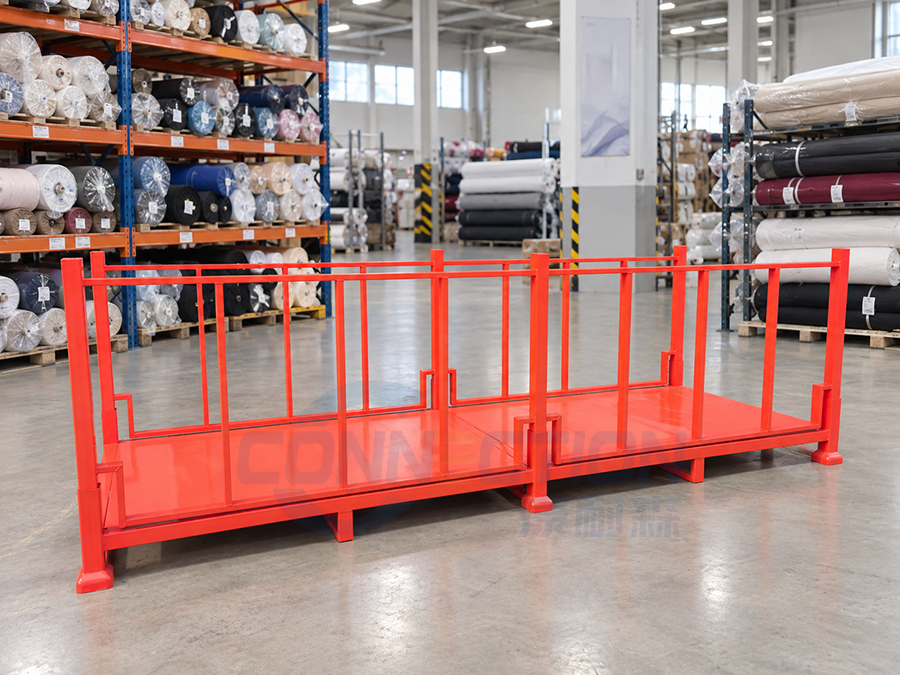
The rack should give the rolls enough support without using significantly more floor space than necessary. If the rack is too short, the roll may not sit correctly. If it is much longer than the material being stored, valuable aisle and storage space can be wasted.
Connection Steel currently offers fabric roll storage racks in several lengths, from more compact formats to long racks for larger textile rolls. This allows the rack footprint to be matched more closely to the material rather than using one size for every application.
For a new project, the actual maximum roll length is therefore one of the first dimensions worth confirming.
Think About How Workers Need to Reach the Rolls
Storage density is important, but access can become a problem if too many rolls are packed into a structure that is difficult to work with.
This is especially relevant in textile warehouses where different rolls may be required throughout the day. A rack that stores many rolls efficiently may still slow down operations if workers regularly need to move several rolls before reaching the one they need.
The practical question is how the material leaves the rack.
If complete batches normally move together, a higher-density arrangement may work well. If individual rolls are selected frequently, the layout should make the required material easier to identify and remove.
This balance between compact storage and easy access is also a recurring concern among warehouse users dealing with large fabric rolls.
Check Roll Diameter and Quantity Together
Roll length is only one part of the rack size.
The diameter of the rolls and the typical quantity stored on one rack determine how much internal space is actually required.
Larger rolls may reduce the number that can be stored within the same footprint, while smaller rolls may allow a denser arrangement.
Instead of asking only for a rack length, it is more useful to provide the approximate roll dimensions and the number of rolls expected per rack.
This gives a clearer starting point for confirming the usable storage area.
When Does a Stackable Rack Make Sense?
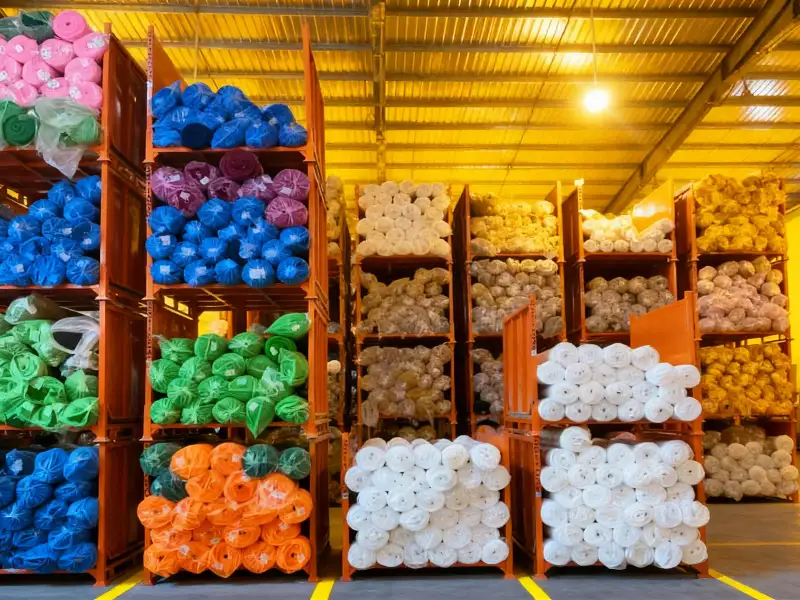
A stackable rack can help use warehouse height when fabric rolls would otherwise occupy a large amount of floor space.
However, stacking should only be considered together with the loaded rack dimensions, normal handling method and available warehouse height.
The advantage is most noticeable where multiple racks contain similar groups of rolls and can be handled as separate storage units.
Connection Steel's current fabric roll rack range includes stackable designs intended for forklift handling.
The goal is not simply to stack as high as possible. The arrangement should remain practical for normal storage and retrieval.
Detachable, Collapsible or Foldable?
This choice matters most when the rack is empty.
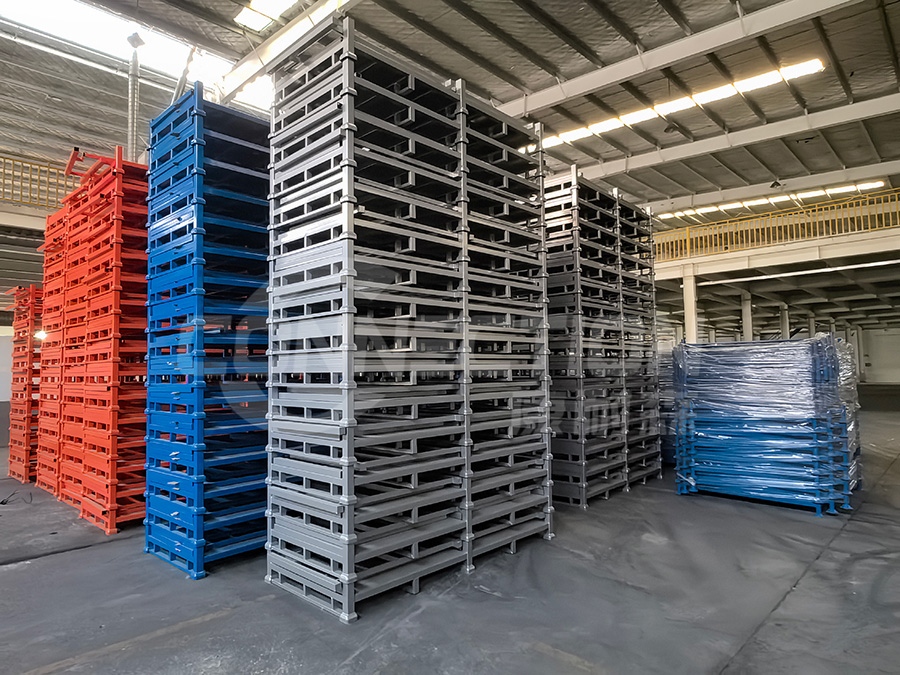
A detachable rack allows removable structural parts to be taken down, reducing the assembled volume when the rack is not in use. This can be useful where empty racks are transported or stored for longer periods.
A collapsible structure is more convenient where the rack frequently moves between loaded and empty conditions because the main parts remain connected while the rack is folded down.
Foldable structures provide another way to reduce empty-rack volume without keeping the rack permanently assembled.
Connection Steel currently uses all three approaches across its fabric roll rack range, so the right choice depends more on daily operation and return logistics than on the name of the structure itself.
Forklift Handling Should Match the Warehouse Route
Fabric roll racks are generally moved as complete units rather than by carrying individual rolls across the warehouse.
For this reason, forklift access needs to work with the actual aisle and handling direction.
The rack width, approach direction and available turning space should be checked against the existing warehouse route. A rack can hold the fabric correctly but still be inconvenient if the forklift cannot approach it efficiently.
For models designed with pallet jack access, the floor condition and entry clearance also need to be considered.
No crane handling should be assumed for these racks.
Empty-Rack Storage Can Affect the Real Cost
Buyers often compare rack size and capacity but pay less attention to what happens when the racks are empty.
For textile operations with changing production schedules, seasonal stock or return movements, empty racks can occupy a considerable amount of warehouse space.
This is where detachable, collapsible or foldable structures become especially useful.
A rack that stores fabric efficiently when loaded but takes up unnecessary space for long periods when empty may not be the most practical option.
If export shipping is involved, the empty structure also affects packing and container utilization.
What Information Helps Before Ordering?
A useful quotation starts with the fabric rolls rather than only the required rack size.
Provide the maximum roll length and approximate diameter, typical number of rolls per rack, preferred handling method and whether the racks need to stack when loaded.
It is also useful to explain whether empty racks will stay in the same warehouse or need to be folded, dismantled or shipped elsewhere.
A photo of the existing fabric rolls and storage area often makes these requirements much easier to understand.
FAQ
What rack size is suitable for fabric rolls?
The rack should be selected around the maximum roll length, roll diameter and quantity stored on each rack rather than using one standard size for every textile warehouse.
Are fabric roll storage racks stackable?
Stackable designs are available. The loaded rack dimensions, handling equipment and available warehouse height should be checked before deciding the stacking arrangement.
Should I choose a detachable or collapsible fabric roll rack?
A detachable rack can be useful where empty racks are stored or transported for longer periods. A collapsible structure is often more convenient when racks frequently move between loaded and empty conditions.
Can fabric roll racks be moved by forklift?
Connection Steel's current fabric roll storage racks include forklift-friendly structures. The actual fork entry and warehouse handling route should still be checked before ordering.
Choose the Rack Around the Textile Flow
A suitable fabric roll storage rack should fit the roll dimensions, warehouse route and frequency of access rather than simply provide the largest possible storage frame.
If you have roll dimensions, warehouse photos or an existing storage method, share them through Contact Us to help confirm a suitable rack length and structure.
Post time: Sep-20-2026


