
Quick Answer
To choose a stacking rack, first confirm the goods being stored, their dimensions, the total load per rack and the required handling method. The rack size should be designed around the goods rather than selected from external dimensions alone.
You should also confirm the required stacking levels, warehouse clear height, forklift entry direction, base structure and operating environment. Load capacity per rack and the permitted stacked configuration should be evaluated separately.
For a custom quotation, provide product photos, dimensions, weight, storage quantity, required stacking levels, handling equipment and indoor or outdoor operating conditions.
Start with the Goods You Need to Store
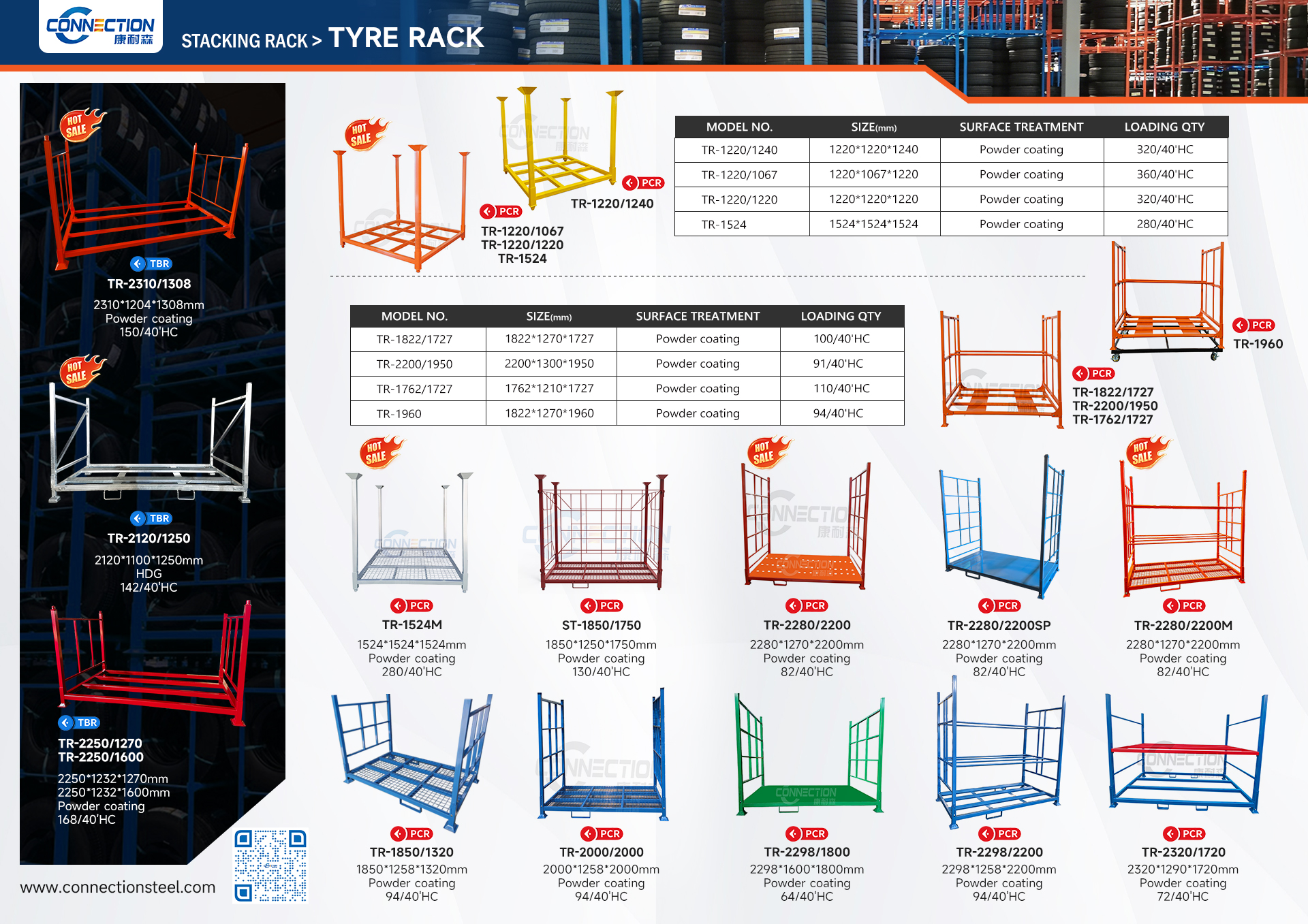
A stacking rack is a portable storage structure used to store goods vertically without installing a permanent racking system. It may be used for tires, fabric rolls, palletized goods, automotive parts, long materials and other industrial products.
The stored goods determine the basic rack structure.
| Stored Goods | Main Design Considerations |
|---|---|
| Tires | Diameter, width, quantity and side restraint |
| Fabric rolls | Roll length, diameter and anti-rolling support |
| Palletized goods | Pallet dimensions, bottom support and forklift access |
| Automotive parts | Product shape, protection and loading method |
| Long materials | Internal length, support positions and side restraint |
| Loose cartons | Mesh, steel plate or side protection |
Before selecting a rack, confirm:
- Product dimensions and weight
- Quantity stored in each rack
- Whether the goods are loose, boxed or palletized
- Whether the load may roll, slide or become unstable
- How the goods will be loaded and removed
The rack should be designed around the stored goods and handling method, rather than selecting an external size first.
Determine the Required Rack Dimensions
Both internal and external dimensions need to be confirmed.
The internal dimensions determine the usable storage space. The external dimensions affect warehouse layout, stacking positions and container loading.
Important measurements include:
- Product length, width and height
- Required internal usable dimensions
- Loading and unloading clearance
- External rack dimensions
- Base-frame and post height
- Total loaded rack height
- Warehouse aisle width
- Forklift operating space
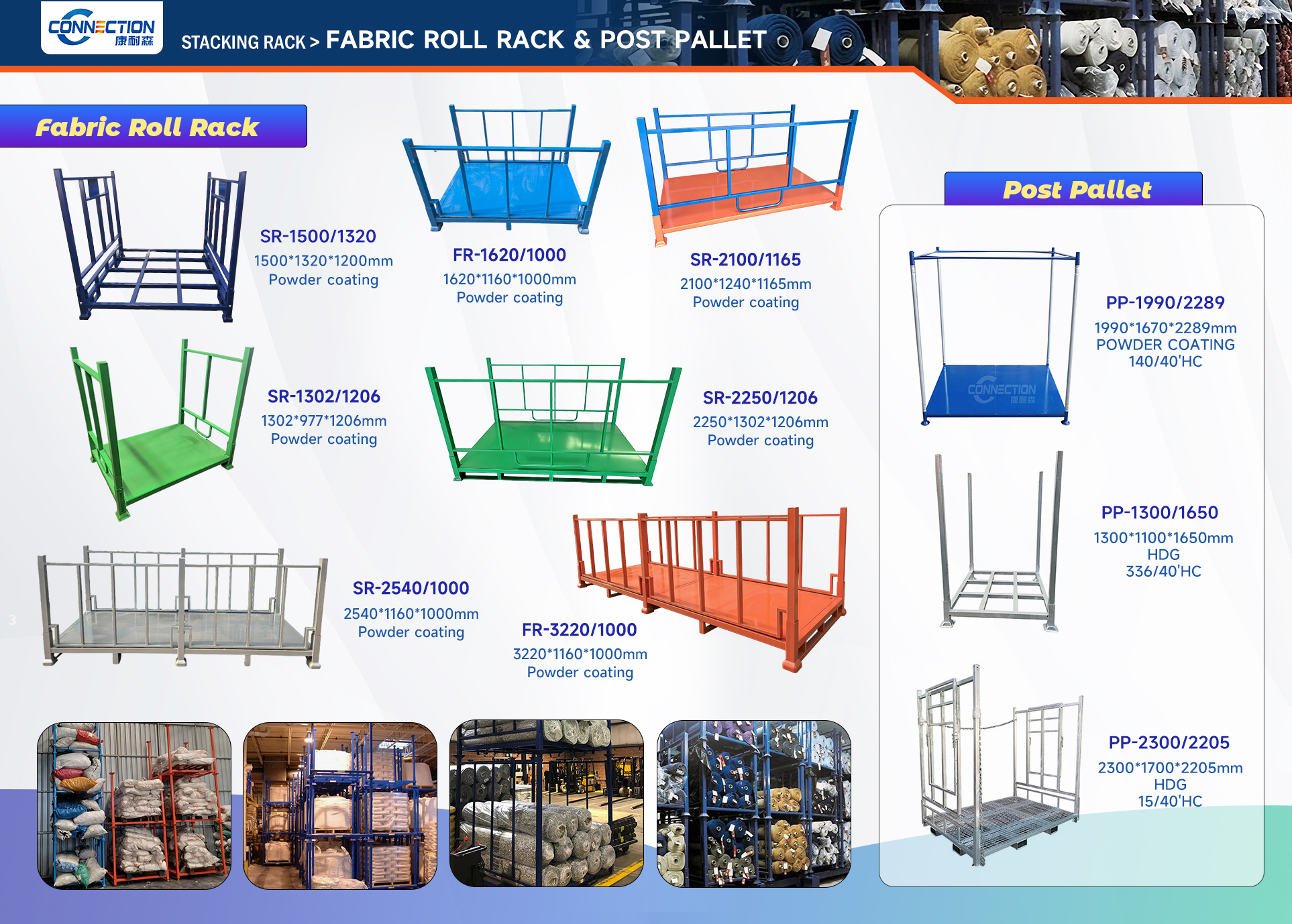
The rack should not fit the goods so tightly that loading becomes difficult. At the same time, excessive clearance wastes warehouse space.
For export orders, dimensions should also be checked against container loading requirements. A small change in rack width, height or disassembled post length may affect the number of units that can be loaded.
Confirm Load Capacity and Stacking Levels
A general description such as "heavy duty" is not enough to determine whether a rack is suitable.
The supplier should know:
- Total load per rack
- Load distribution
- Product center of gravity
- Whether the rack will be moved while loaded
- Required stacking levels
- Frequency of handling
Rack capacity is affected by the base-frame structure, support beams, post section, steel thickness, welding structure, rack dimensions and handling conditions.
A uniformly distributed load is different from a concentrated load. A heavy component supported at only a few points may require a different base structure from evenly distributed cartons of the same total weight.
Load capacity per rack and safe stacked load are not the same specification.
The rated load of one rack describes how much that individual rack is designed to carry under defined conditions. Safe multi-level stacking also depends on post alignment, stacking-foot design, load stability, floor levelness and total stacked height.
The suitable stacking height should therefore be confirmed for each design rather than treated as a universal value.
Buyers should also check:
- Warehouse clear height
- Forklift maximum lifting height
- Forklift capacity at the required height
- Floor flatness
- Clearance from lighting and sprinkler systems
Choose the Right Rack Structure
The main structural options are detachable, collapsible and welded stacking racks.
| Structure | Main Characteristic | Suitable Situations |
|---|---|---|
| Detachable | Posts can be removed from the base | Seasonal storage, export shipping and changing layouts |
| Collapsible | Side structures fold while remaining connected | Frequent use and repeated turnover |
| Welded | The rack remains permanently assembled | Continuous warehouse use |
| Nestable | Empty racks fit partly inside each other | Reducing empty-rack storage space |
A detachable rack can reduce empty storage and transport volume, but the removable posts need to be managed.
A collapsible structure may be easier when racks are opened and folded frequently.
A welded structure requires fewer operating steps but occupies its full volume when empty.
No single structure is suitable for every warehouse. The decision should consider daily use, return transport, empty-rack storage and assembly requirements.
Select the Base and Side Protection
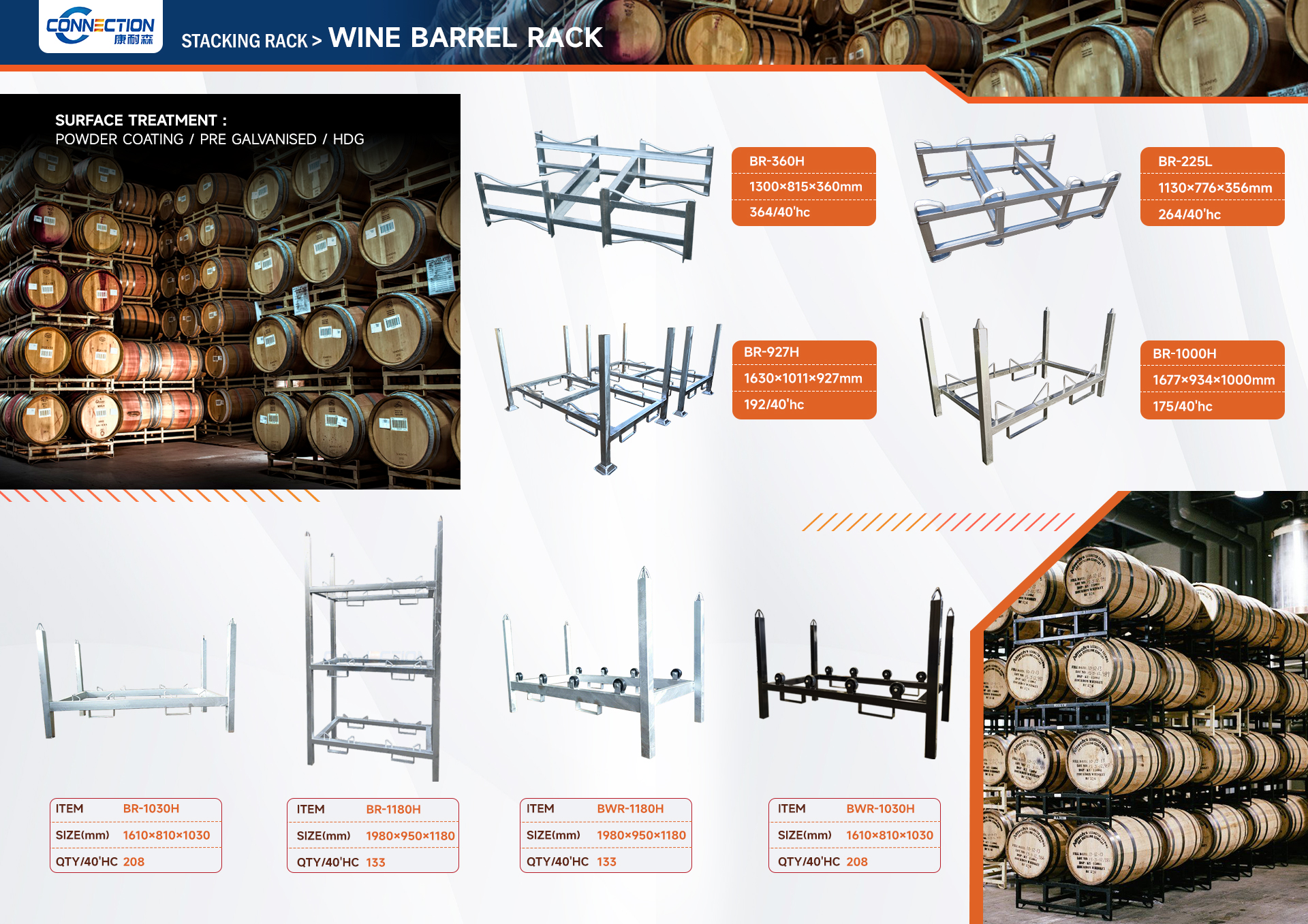
The base structure should match the product shape and load distribution.
Common options include:
- Open steel frame
- Reinforced support beams
- Steel sheet base
- Wire mesh base
- Pallet-compatible support
- Product-specific cradles
- Anti-rolling bars
Large rigid goods may rest directly on support beams. Small cartons, loose parts or irregular products may require mesh or steel sheet support.
Side protection may include mesh panels, removable bars, chains, guardrails or open sides.
More protection is not always more practical. The selected structure should prevent goods from falling while still allowing efficient loading and unloading.
Confirm the Handling Method
The rack design should be compatible with the equipment used in the warehouse.
Confirm:
- Forklift or pallet-jack handling
- Fork entry direction
- Required fork-pocket spacing
- Whether the rack is moved while fully loaded
- Required ground clearance
- Whether casters or lifting points are needed
Forklift entry direction and pocket position should be confirmed before production, especially when the rack will be handled while fully loaded.
A general claim such as "forklift accessible" does not guarantee compatibility with every forklift or pallet jack. The actual fork dimensions and operating method should be considered.
Choose a Suitable Surface Treatment
Surface treatment should be selected according to the operating environment rather than appearance alone.
| Surface Treatment | Typical Use |
|---|---|
| Powder coating | General indoor warehouse and factory use |
| Hot-dip galvanizing | Humid, outdoor or more corrosive conditions |
| Zinc-plated components | Selected components or specific project requirements |
Before selecting a finish, confirm whether the rack will be used indoors, outdoors, in a humid area or in cold storage.
Hot-dip galvanizing is not automatically required for every application. Powder coating may be suitable for normal indoor conditions, while a more corrosion-resistant treatment may be needed for outdoor or humid environments.
Information to Provide Before Requesting a Quote
Complete information helps the supplier prepare a more suitable design and quotation.
Provide:
A drawing is useful for confirming dimensions, usable clearance, base structure, post positions and handling details before production.
Review our custom stacking racks or send your storage requirements for a project-specific discussion.
Frequently Asked Questions
Request a Custom Stacking Rack Solution
A suitable stacking rack should match the stored goods, load, warehouse layout and handling equipment. Empty-rack storage, transportation and daily operation should also be considered.
Send us your product size, weight, quantity per rack, required stacking levels and handling method. We can review the information and discuss a suitable rack structure and specification.
Post time: Jun-18-2026


